Water damage restoration, Olympia WA
Water damage in Olympia, Washington? Call now.
Dial the number and your call is routed to an independent restoration contractor that takes water damage calls in Olympia. Expect a few questions about what is wet, where the water came from and whether it has stopped.
This site is the front door, not the crew. It does not claim trucks, staff or a license of its own.
Calling soon after you find the water usually leaves more choices. The call goes to an independent contractor.
What kind of water is it?
Pick the page that fits, or just call. The contractor will sort out the details with you.
- Water damage restorationThe whole job from the first call to the last dry reading.
- Water extraction and dryingPulling standing water out, then drying what stays.
- Burst and frozen pipesWinter splits, supply-line failures and what the City does at the meter.
- Crawl space waterWater under the floor, where a house can hide it for weeks.
- Sewage backupBacked-up drains, who owns the side sewer and who to ring first.
- Storm and roof-leak damageRain that found a way in through roof, flashing or gutter.
- Appliance leaksWashers, water heaters, dishwashers and fridge lines.
- Fire and smoke damageSoot, smoke odor and the water a fire hose leaves behind.
Why Olympia houses get wet from below
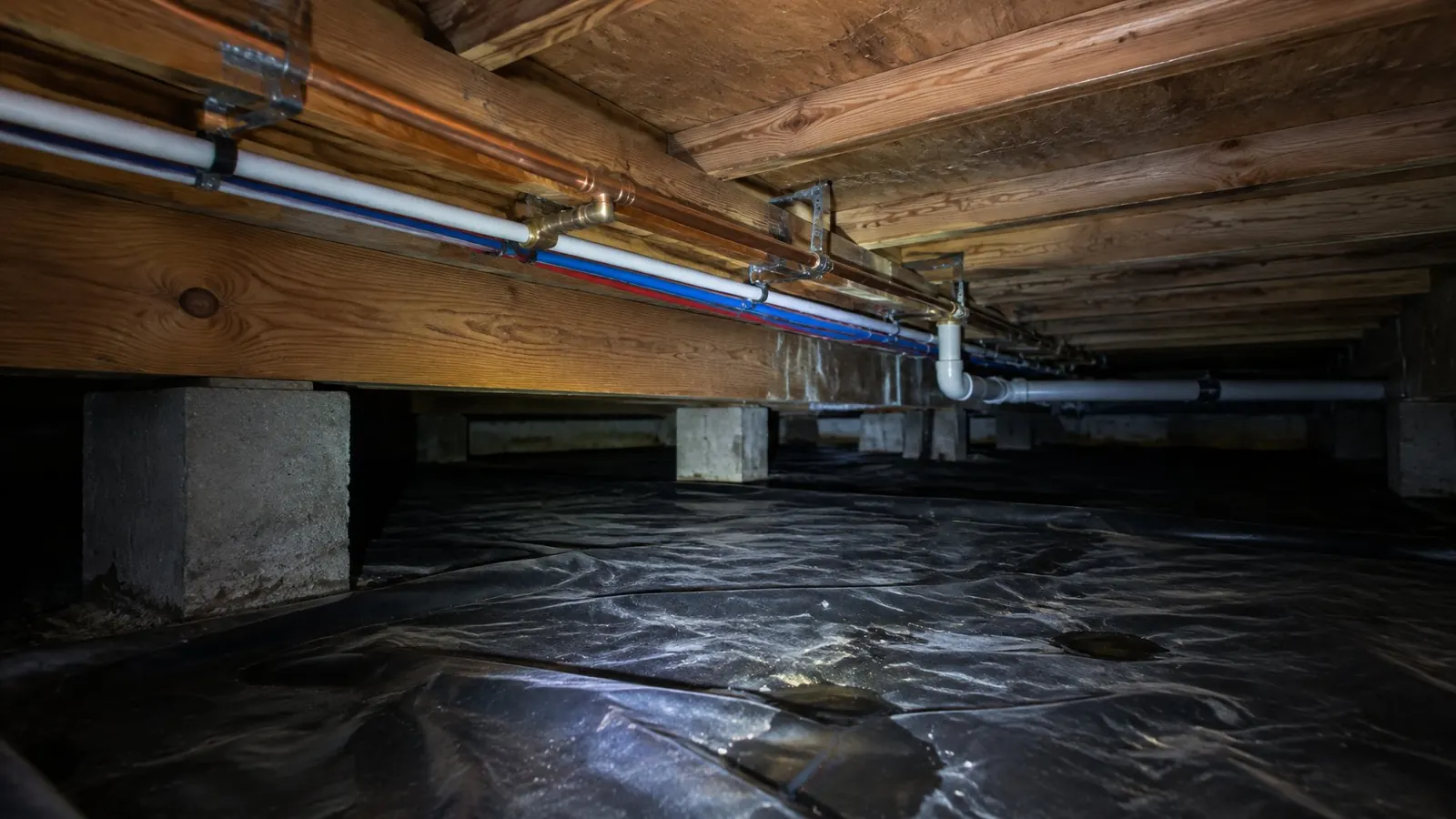
A house on a crawl space has a hidden floor of bare ground under the joists, normally covered with black plastic. When wet soil sends moisture under the plastic, or a supply line weeps for weeks, the damage stays out of sight until a floor feels soft.
Washington's residential code, WAC 51-51-0408, calls for a ground cover of six-mil black polyethylene or an approved equal over the earth in a crawl space, with exceptions.
The crawl space page covers causes and what insurers tend to say about seepage.
Tides, storms and low streets
King tides can flood low-lying parts of Downtown Olympia and the Budd Inlet shoreline, according to the City. Flooding does not happen at every high tide, but when conditions line up the City says water can rise 18 inches or more above street level.
On 27 December 2022 the predicted high tide was 16.63 feet. Low air pressure and heavy rain pushed the actual tide to 18.40 feet.
Flood water from outside and water from a burst pipe inside are handled differently by insurance. Read the insurance basics before you file anything.
How a call goes
You call
Use the number at the top of any page. Tell the person who answers the street address and what happened.
They ask a few things
What is wet, how long it has been wet, whether the source is off and whether anyone smells smoke or sewage.
You are connected
The call goes to an independent restoration contractor. Anything about scheduling, price and scope is between you and them.
You decide
Ask for the scope in writing. Check the contractor's Labor and Industries registration. You can hang up and call someone else.
Renting in Olympia?
About half of Olympia's occupied homes are rented: the Census Bureau's 2020-2024 estimate is 12,766 renter households out of 25,451. If water is coming through your ceiling or floor, the first notice usually goes to your landlord, in writing.
The renters page sets out the repair deadlines in state law and what a renters policy tends to pay for.
ZIP codes this line serves
These Olympia ZIP codes are on the line. Lacey has its own page, and the service areas page shows both.
Questions people ask
Do you send someone?
No. This site connects your call with an independent contractor. Any work, price and schedule come from that contractor.
Is there a charge for calling?
The site does not bill you. Whatever the contractor charges is between you and the contractor, so ask before agreeing to work.
Do I need to be home?
Tell the contractor your situation on the call. If nobody can be home, say so on the call.
Water still spreading? Make the call.
You will be asked what is wet, where the water came from and whether it has stopped. Have the street address in front of you.